
Civic Frameworks Coalition
The Client
Civic Frameworks Coalition (CFC) builds permanent civic hubs where coalition partners share space, campaign production and a governed data system. The first hub opened in Princeton, West Virginia with seven coalition partners, a second launched in Broward County, Florida in May 2026, and four more metros are defined for 2027. Un_Standard is the strategy studio inside the same civic ecosystem and works with CFC at documented market rates.
The Challenge
The model is layered and compliance-heavy, and funders had no category for it. The default voice of the sector, urgent, uplifting and abstract, would have signaled the wrong kind of institution to counsel and to program officers. The job was to make a complicated model legible to a skeptical reader in a few minutes, and to give everyone who writes for CFC the rules to keep it that way.
The Work
We built the foundation in sequence, so each document constrained the next: a fourteen-document system covering research, positioning, character, language, messaging, visual identity and channel rules. Five decisions shaped it.
Map the real choice set. Funders were never choosing between CFC and a rival. They were choosing between CFC and state tables, intermediaries, data vendors and cycle-by-cycle grants. Each funds one layer, and none of them compounds.
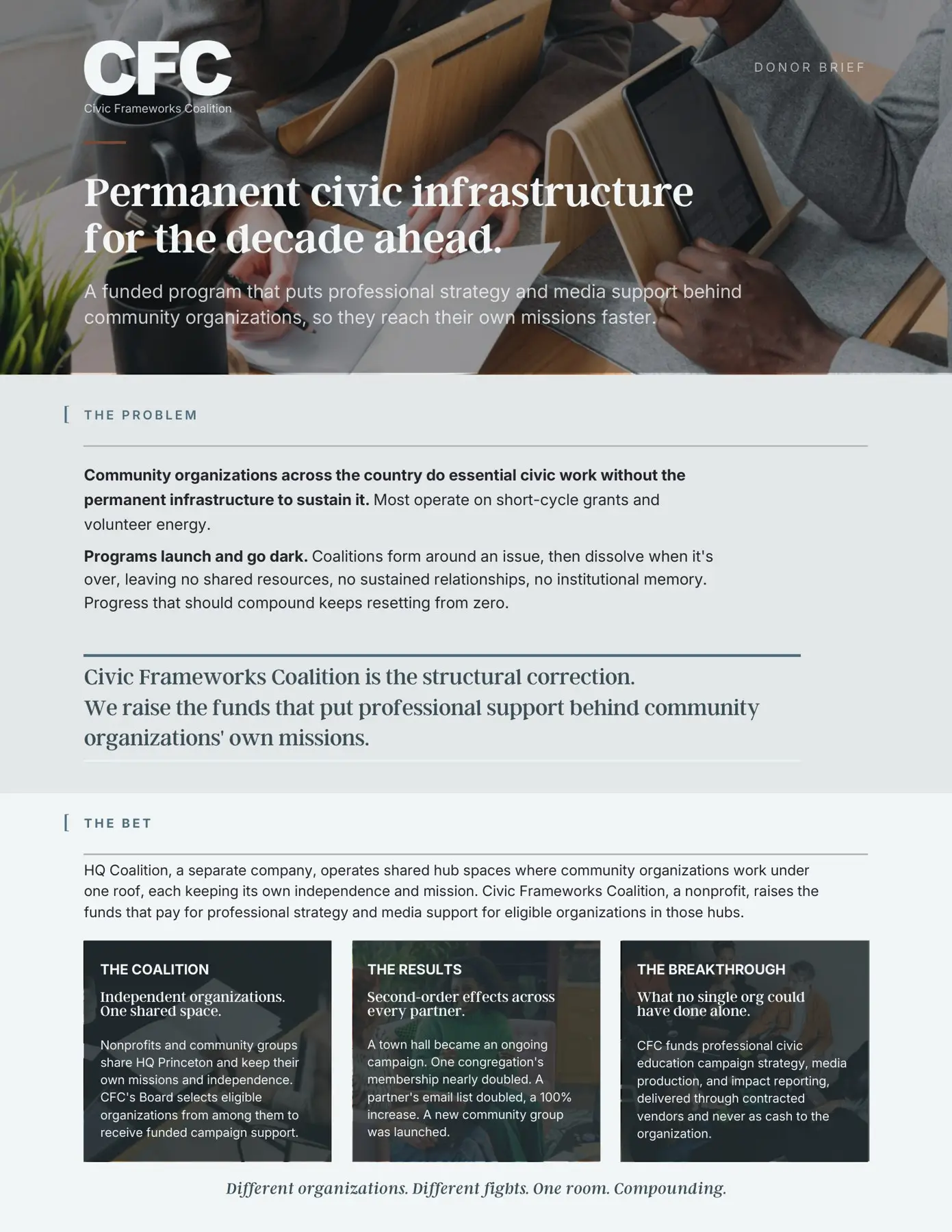
Position as a correction. The donor brief opens with a contrast: permanent infrastructure on one side, rebuilding from zero each cycle on the other. “The structural correction” follows from it. A cleverer tagline was available, and a sophisticated funder would have discounted it.
Lead with the asset that compounds. The civic intelligence system comes first, and the hub model answers the follow-up questions about how it scales.
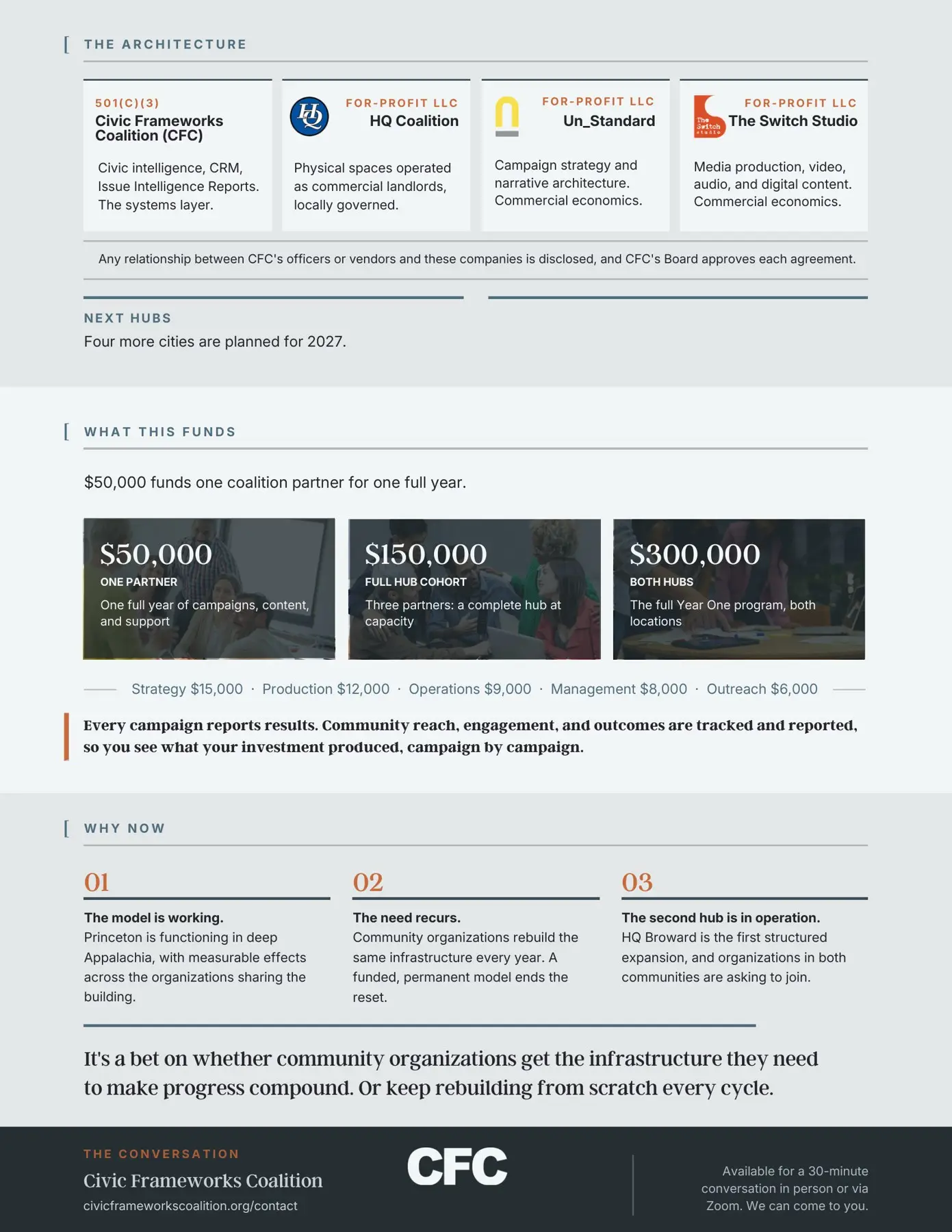
Show the walls. Most organizations bury compliance. This brand puts it on the page as proof, in plain language, written as if board counsel were reading.
Set the voice by subtraction. No urgency, crisis language, countdown clocks, innovation vocabulary or partisan signaling. Permanence carries the weight urgency usually does. The preferred vocabulary is concrete: rooms, contracts, reports, budgets, walls.
The visual identity is architectural and restrained. Steel and concrete neutrals do most of the work, and one signal orange appears once per view. Display type is a tightly tracked serif, body type is a clean sans, and photography is documentary: boards, screens, structures and work in progress. Gradients, shadows, glows and stock imagery are out.
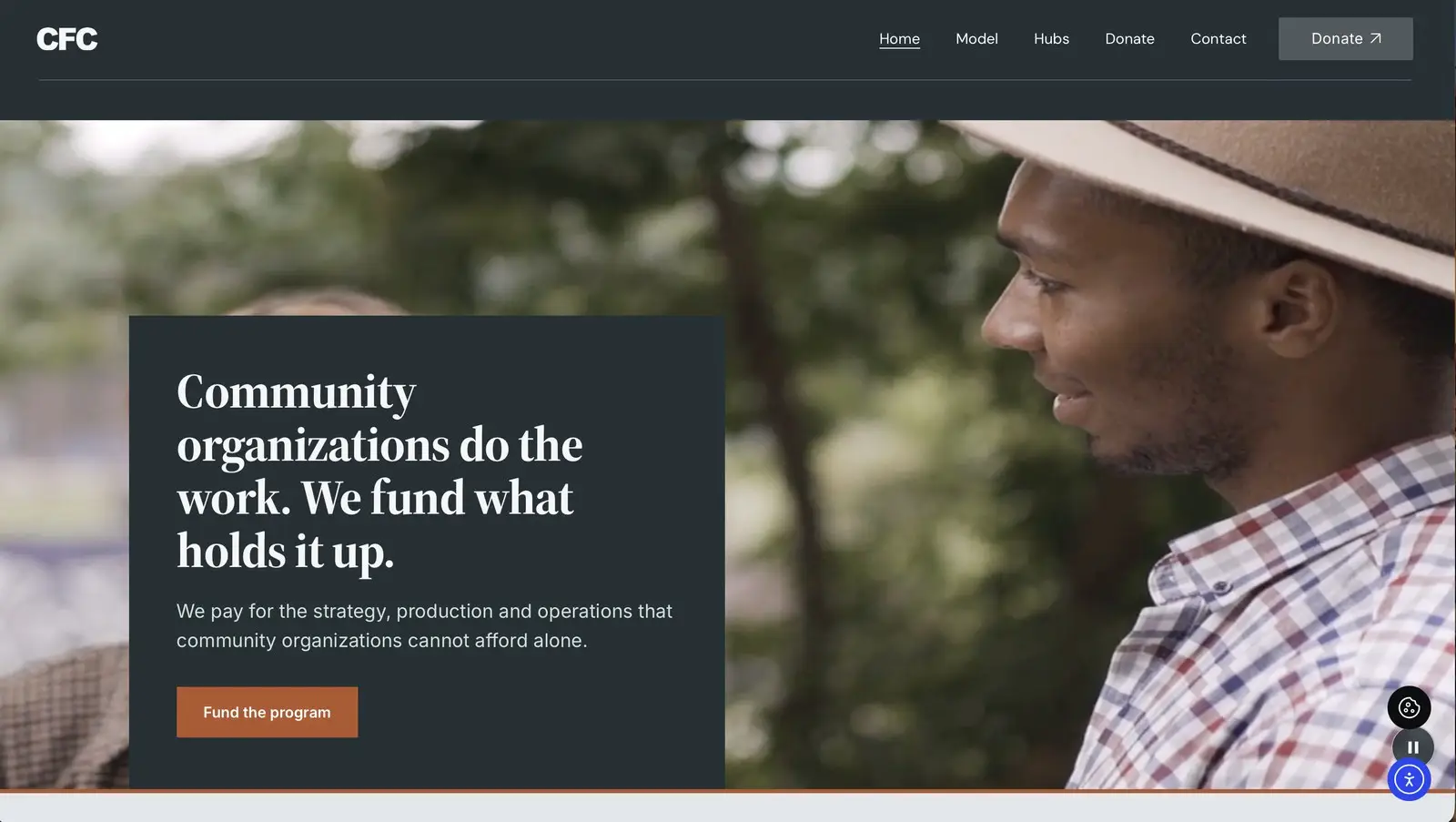
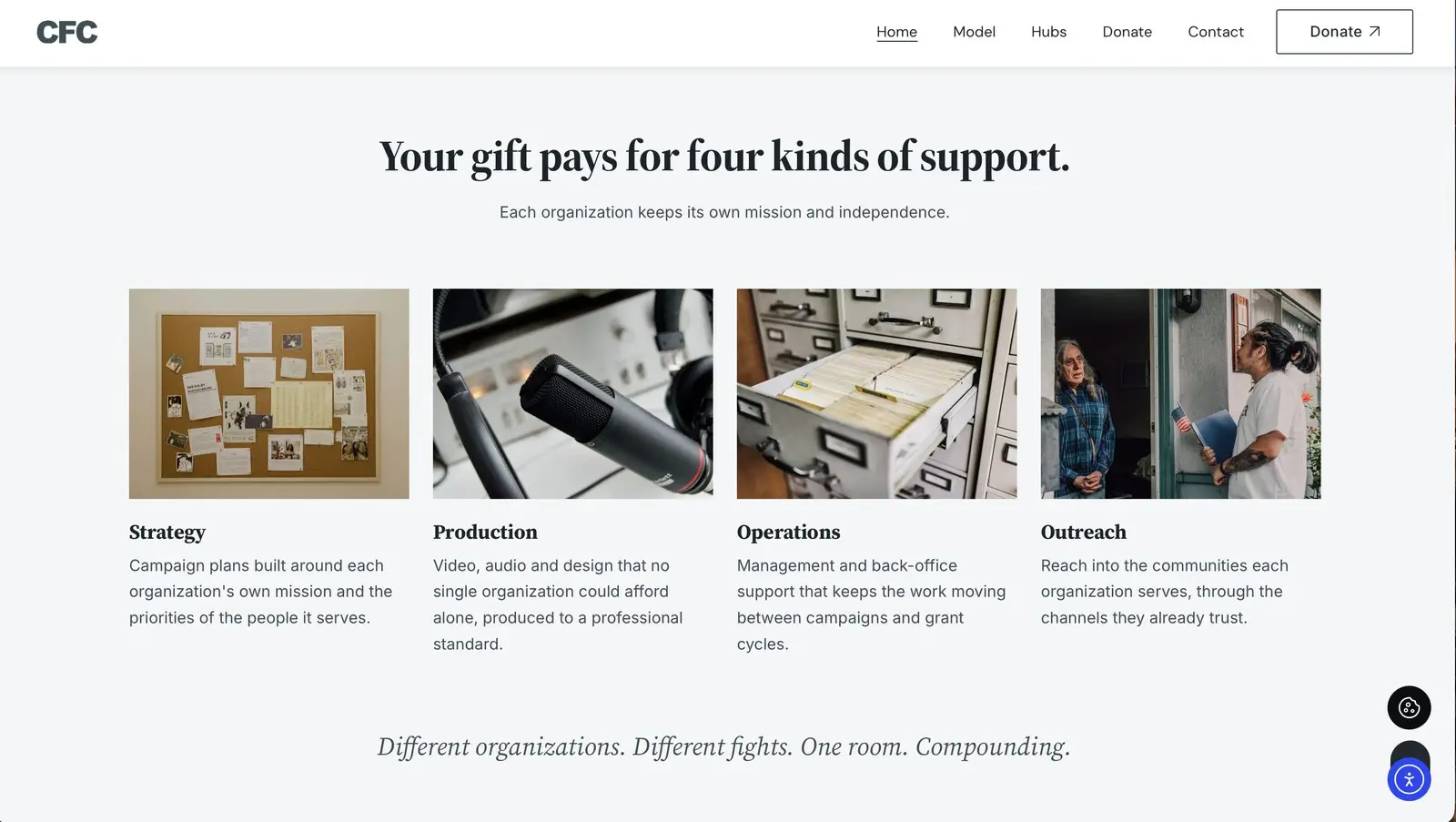
The first assets built on the system are a donor one-pager and the organization’s website.
The Result
CFC now has a brand foundation that any hub director or program officer can deploy without translation, and a proof layer in the Princeton hub: seven coalition partners operating from one permanent home. Every asset runs the same four tests. Does it change what the reader understands about civic infrastructure? Does it do something, or only represent something? Can it be used without translation? Is it as disciplined as the best institutional design?
The work shows how Un_Standard operates. Systems come before assets, we write for the hardest reader in the room, and restraint is a strategy.
Date:
February 24, 2022