



Home Justice
The Client
Home Justice Technologies is a legal technology venture that scans residential leases against attorney-reviewed state law and licenses the platform to legal aid organizations. It starts with manufactured housing tenants in West Virginia and expands state by state. Home Justice was founded by Un_Standard’s principal, and Un_Standard served as its strategy and brand team.
The Challenge
Twenty-two million Americans live in manufactured homes, and many own the house while renting the land beneath it. Moving a home is expensive and can destroy it, so the landlord who controls the lot controls nearly everything else. In West Virginia, 28 of 55 counties are classified as legal deserts.
Home Justice grew out of casework in Mercer County, including a class action settlement in December 2024. By spring 2026 the proof existed and the product did not. The brand had to speak to a ninety-year-old tenant, a plaintiff attorney and a foundation program officer in one voice, without talking down to the first or overclaiming to the others, and it had to avoid charity framing, savior framing and AI hype.
The Work
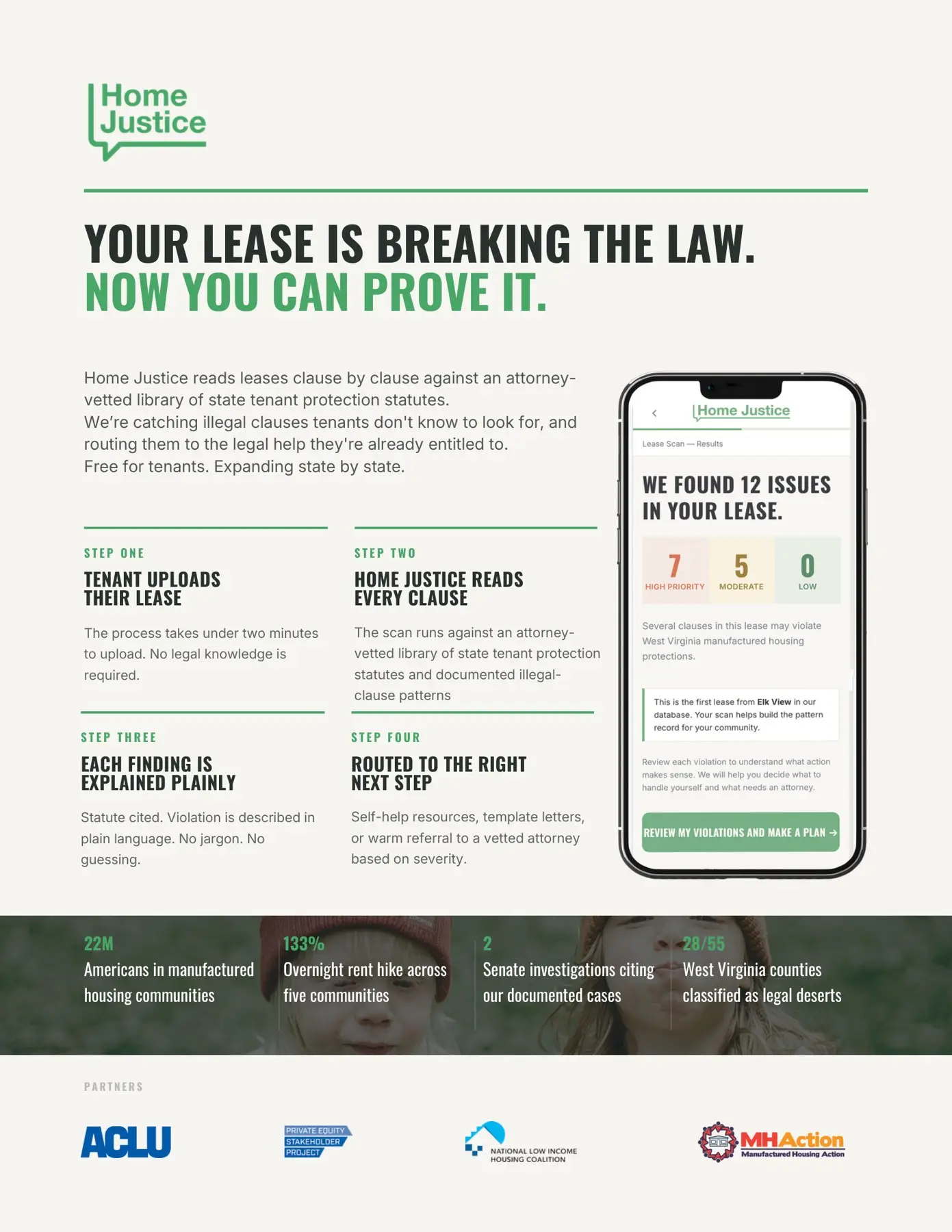
Name the category. Tenants can already search for their rights. What they lack is a way to recognize a violation, document it so a lawyer can use it, and reach the right person in time. Home Justice was positioned as enforcement infrastructure, with a belief short enough to repeat: housing rights exist, enforcement doesn’t. Legal aid and organizing groups are treated as destinations and customers, so the brand never picks fights with the people it needs.
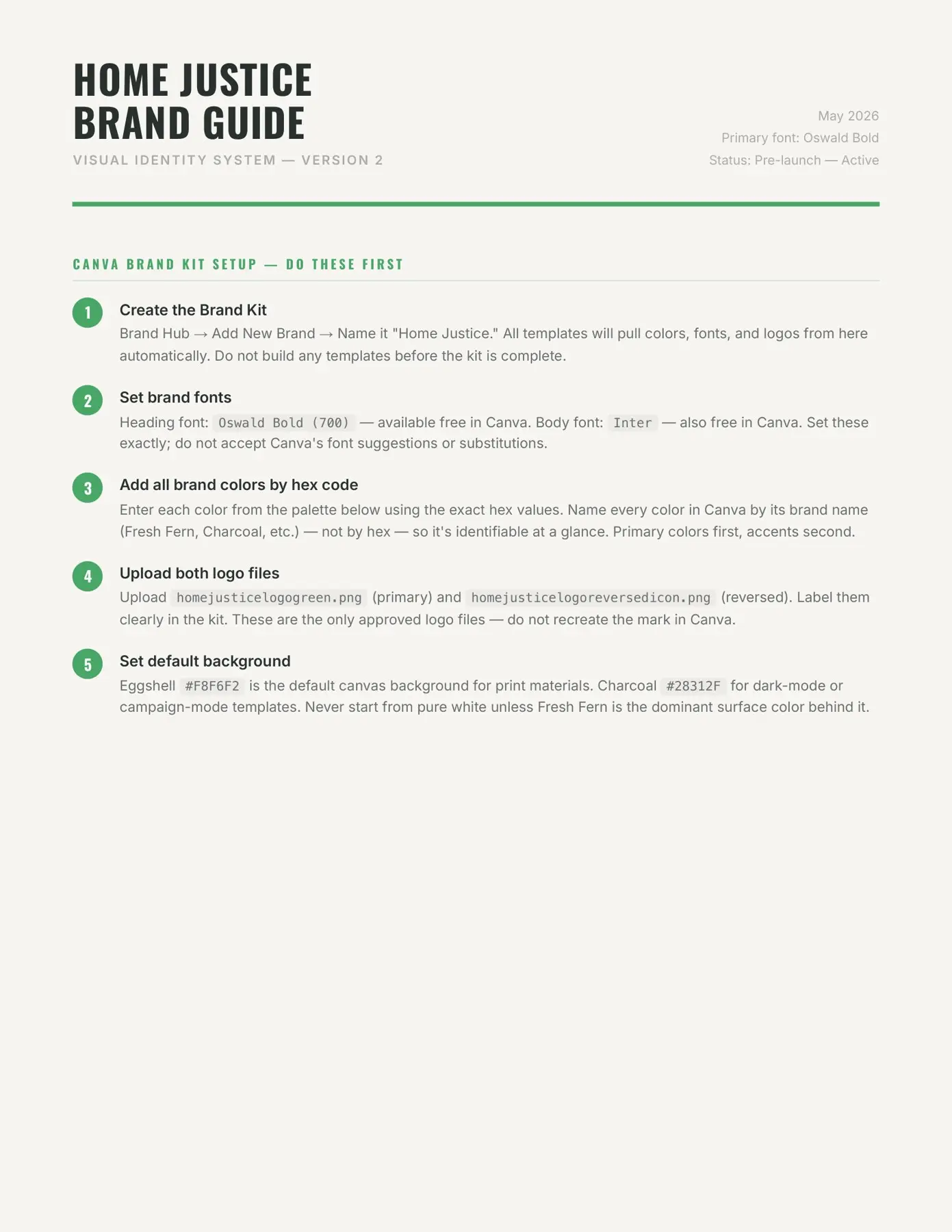
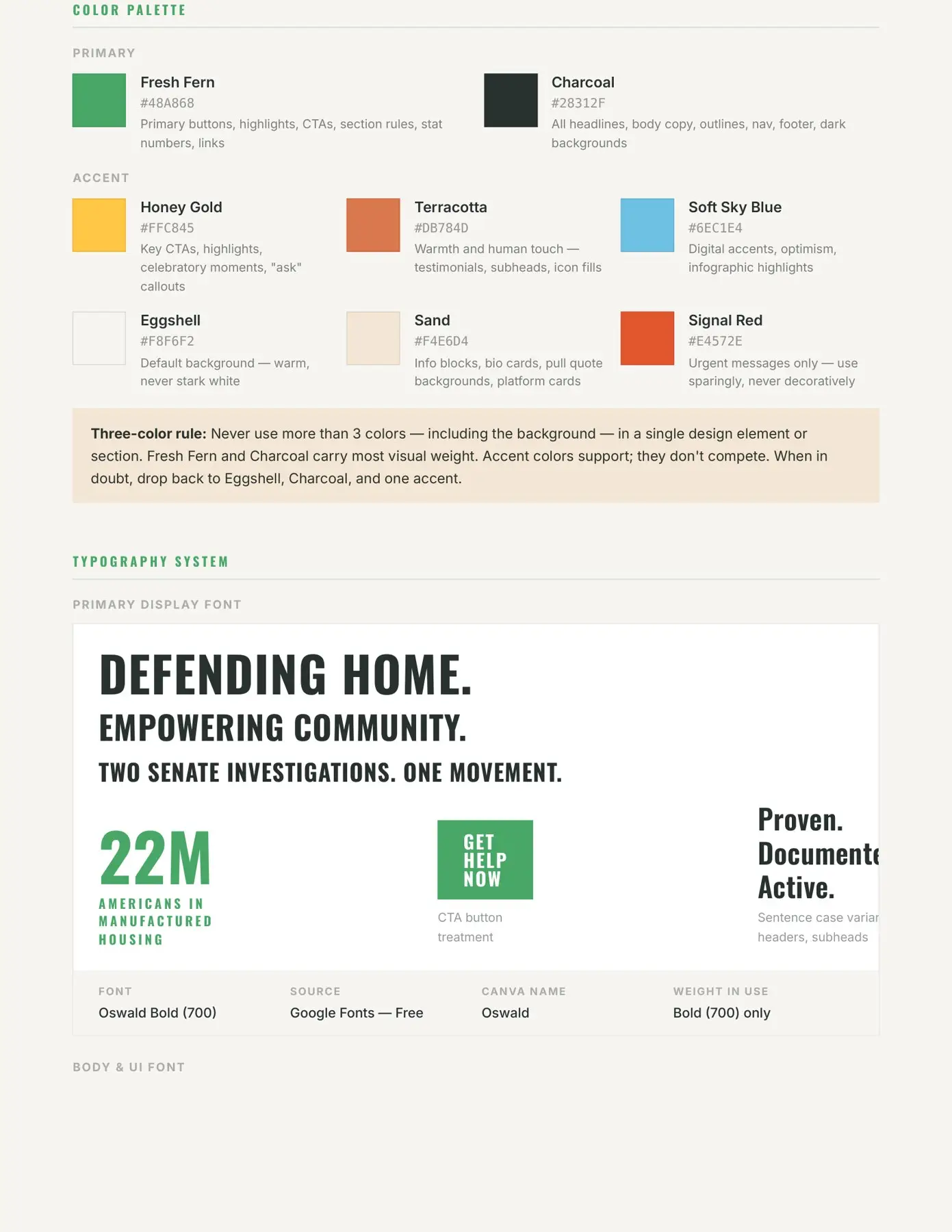
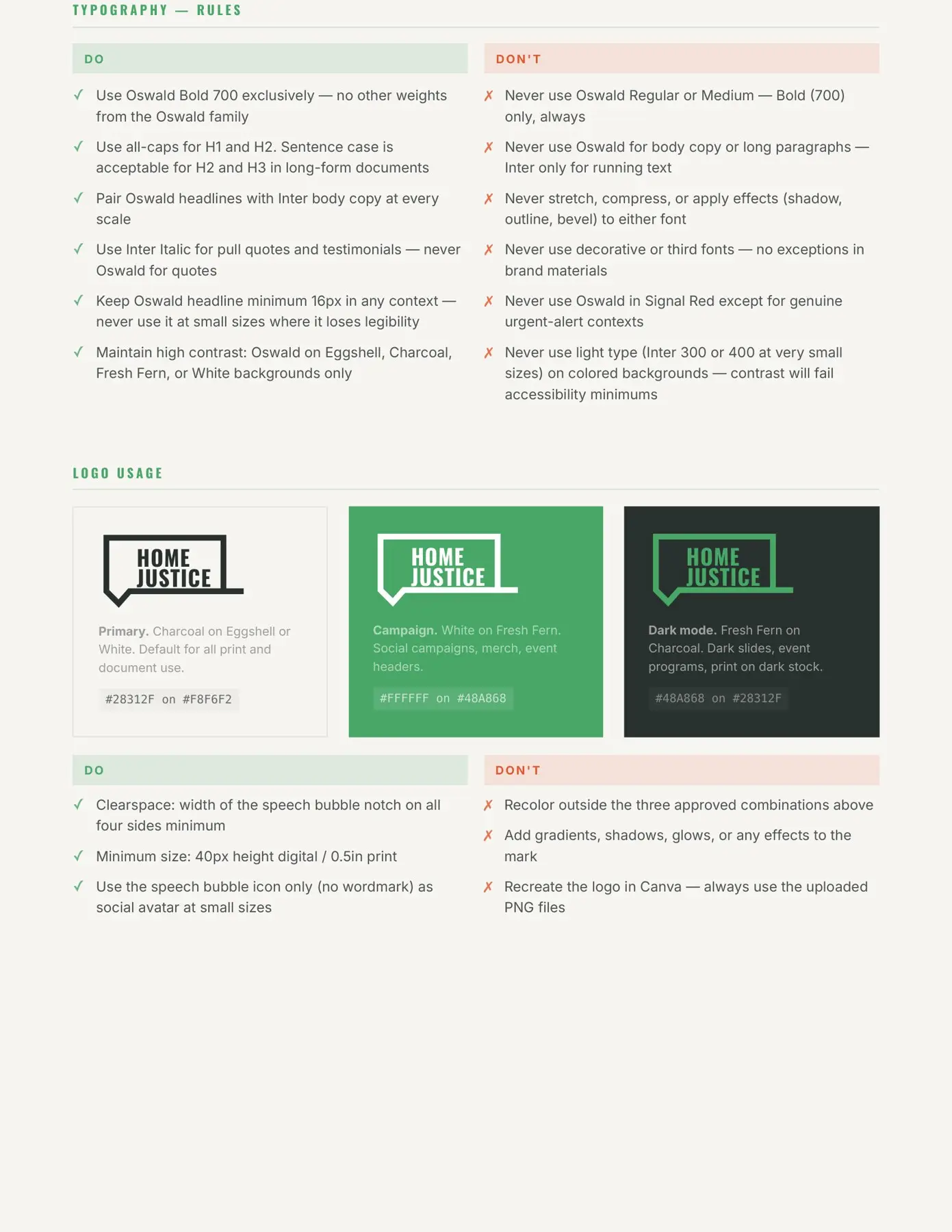
Give the brand a character it can be held to. The voice is defiant, hopeful, neighborly and accountable, anchored by one operating value: receipts over rhetoric. It comes with adaptations for five audiences and a plain list of what the brand never says: victimhood language, savior language, nonprofit clichés, partisan framing and empty promises. Fresh Fern, Charcoal and Eggshell carry the palette, Oswald Bold sets display type and Inter handles everything people read. No element uses more than three colors, and pure white is never the starting canvas.
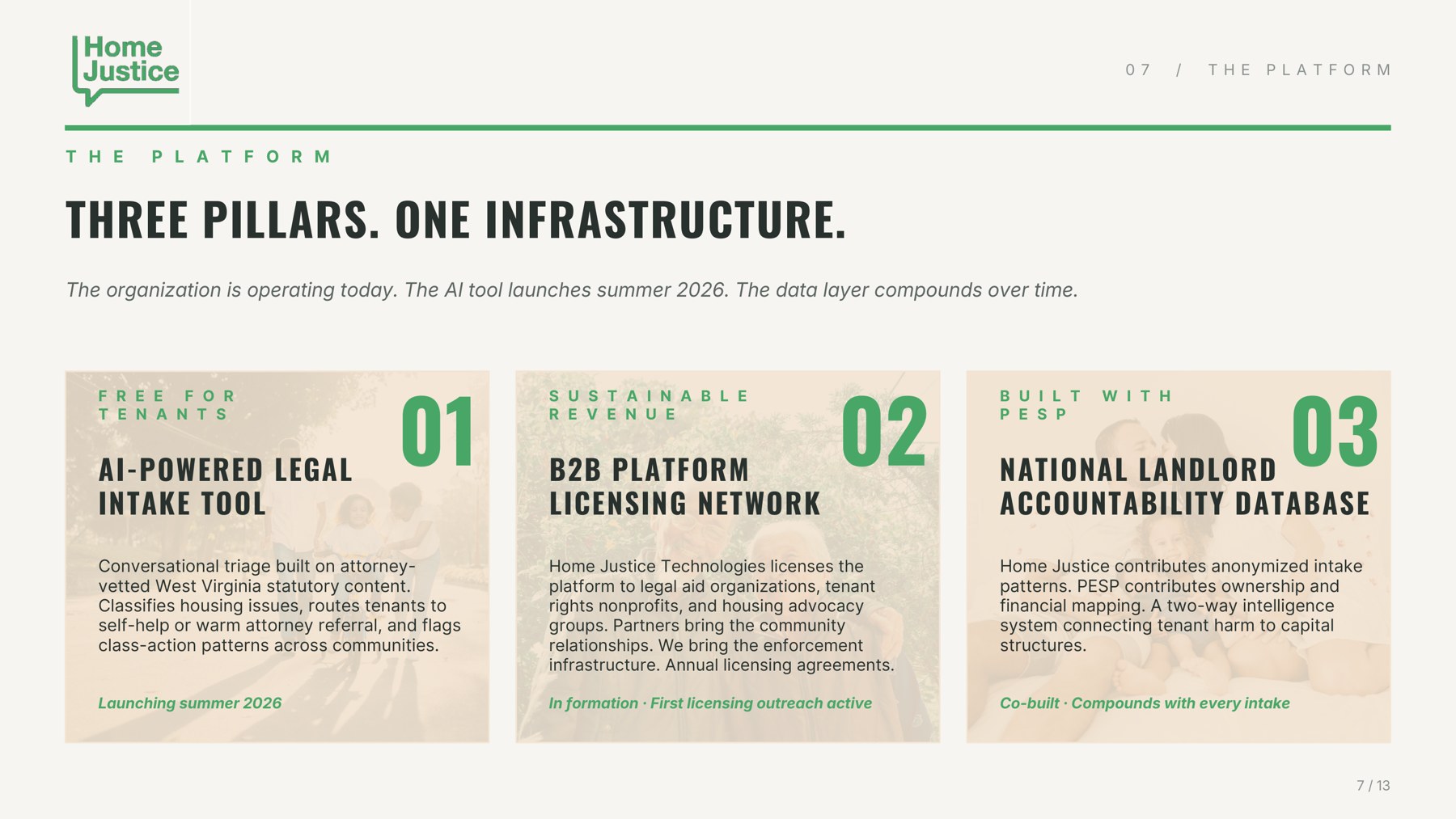
Constrain the AI and the language around it. Before the build we reviewed seven existing tenant-facing AI tools. None covered manufactured housing, served rural low-bandwidth users or operated in West Virginia. Product answers draw on a statute database that attorneys review before a state goes live, with no open-ended generation, and every output carries a notice that it is legal information and not legal advice. The voice bans “AI lawyer” and “revolutionizing” outright.
Keep the materials honest as the facts move. The pitch deck separates the organization, already operating, from the tool still in build. When the company restructured in June 2026, every asset was audited and rebuilt. Customer discovery sharpened the line to: detection for tenants, triage for the people who serve them.
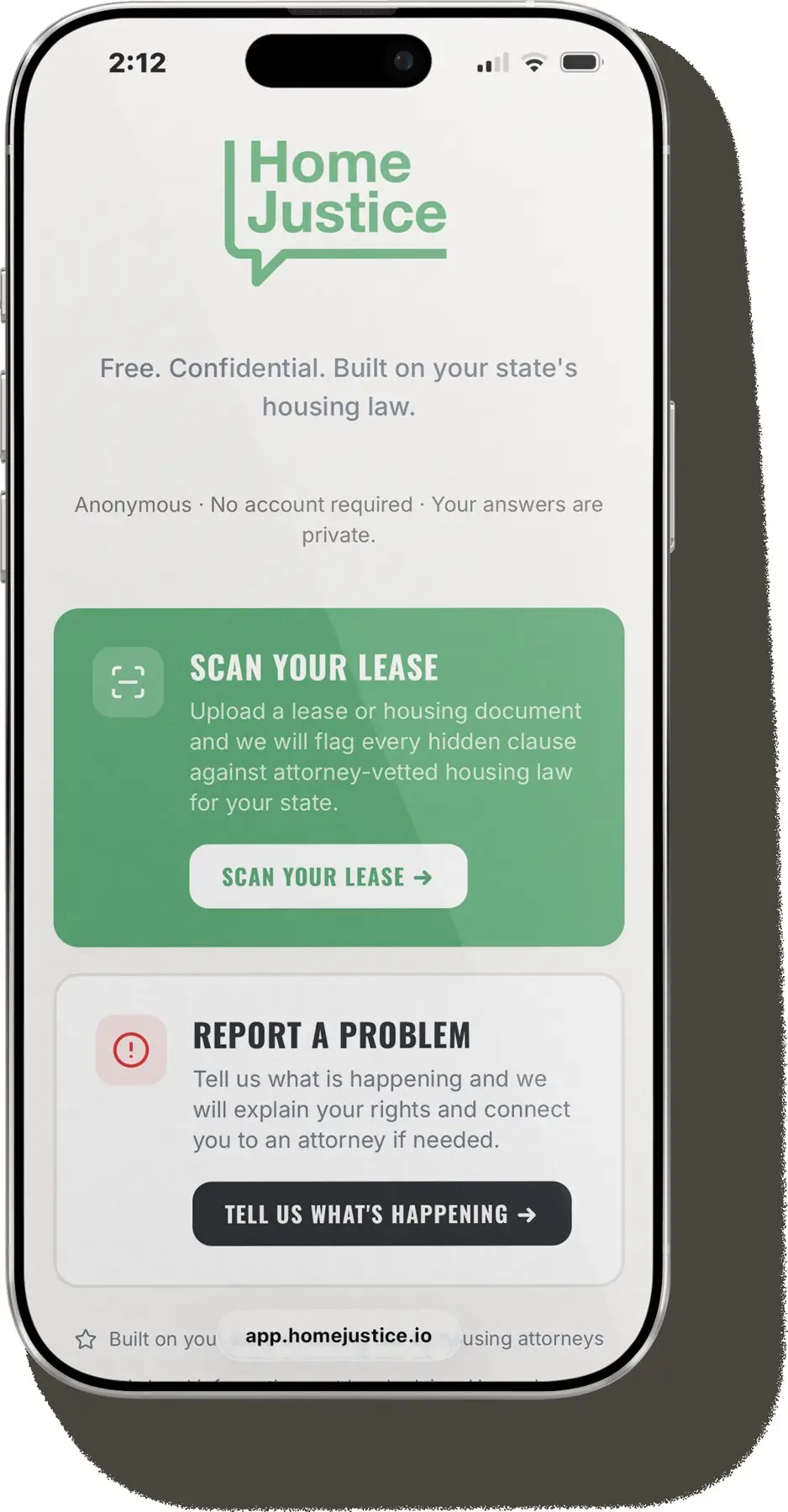
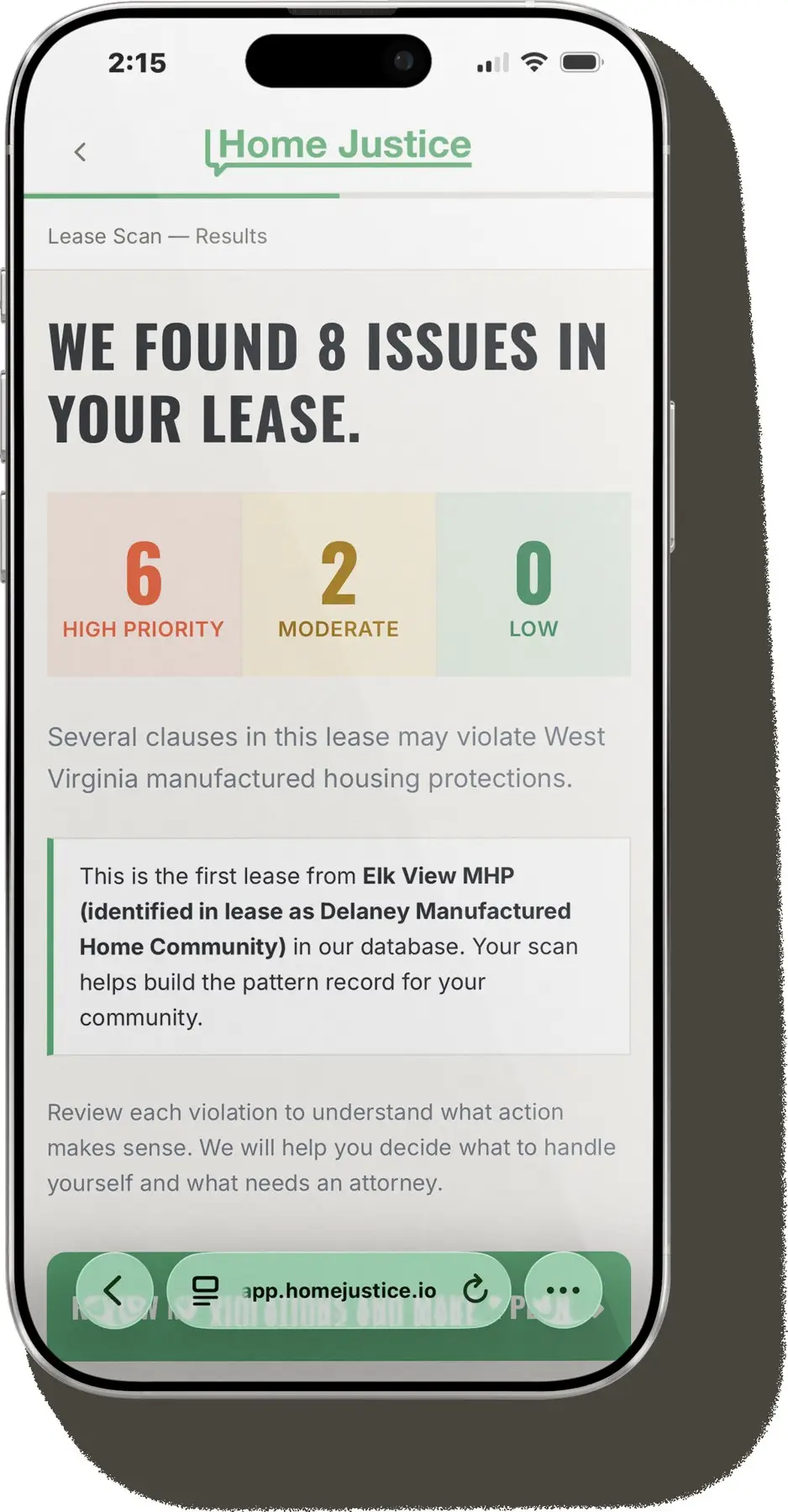
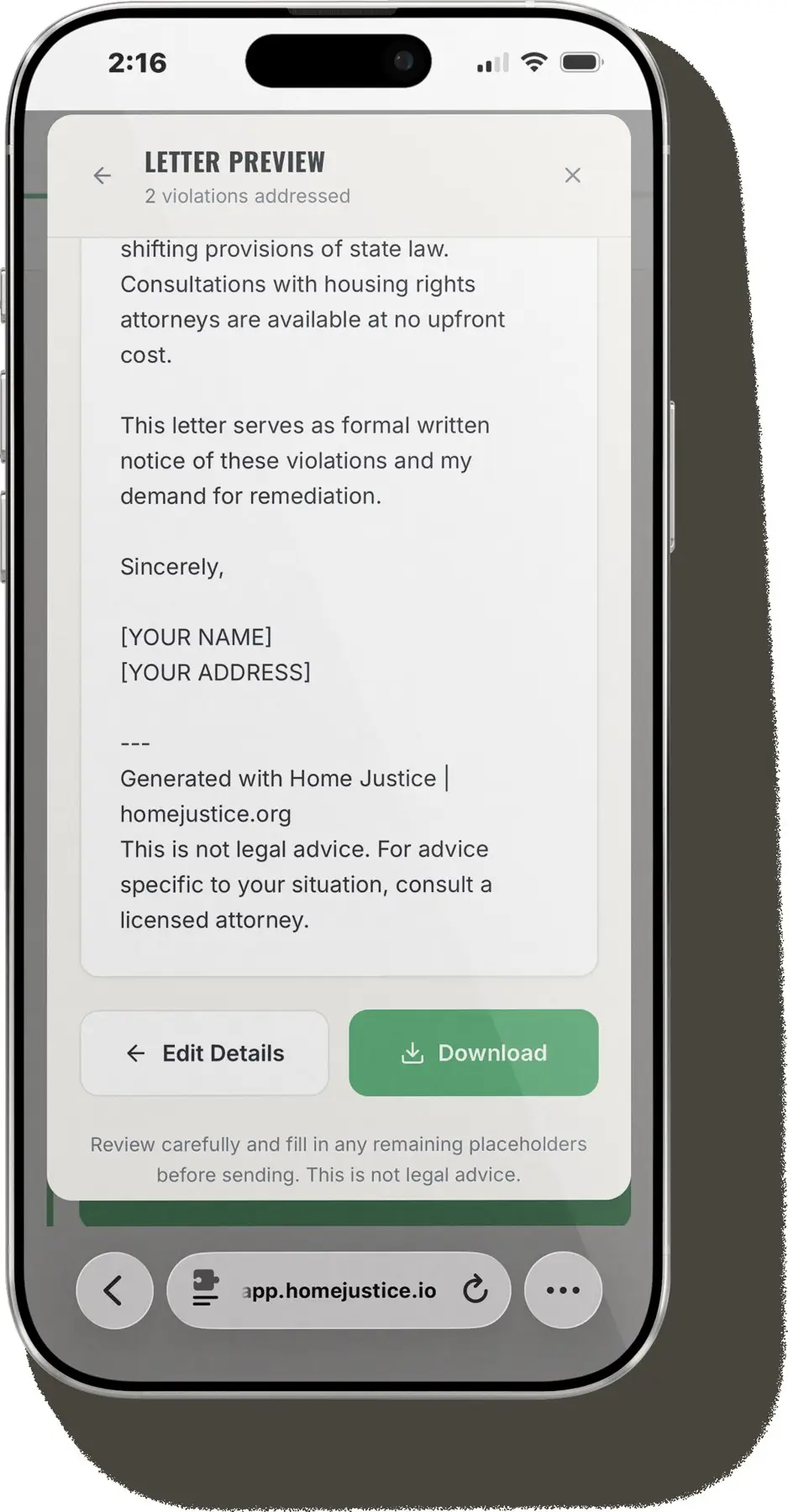
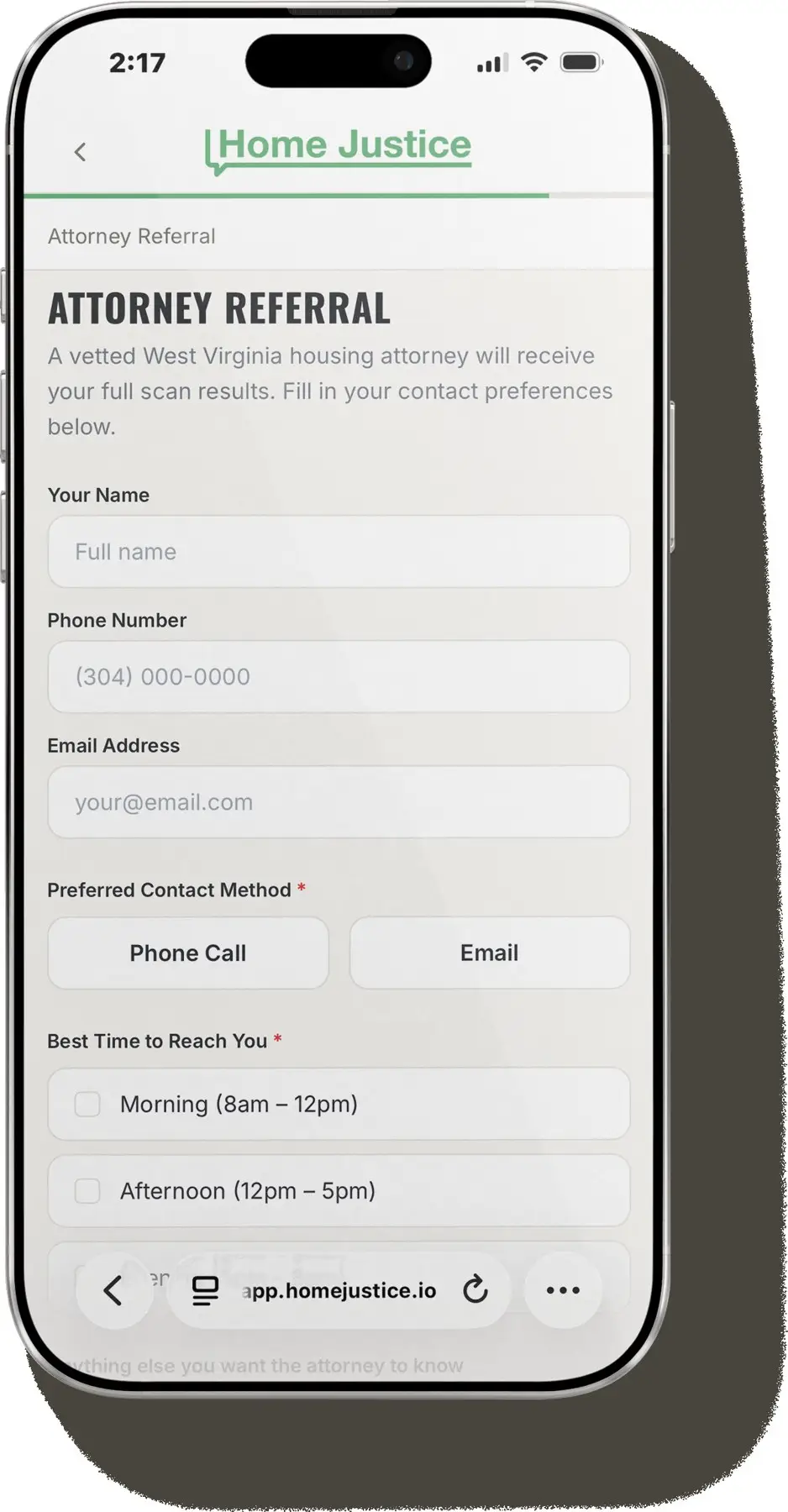
Deliverables: a twelve-document strategy set, logo suite and templates, voice guides, manifesto and positioning, a 13-slide deck and partner materials, a product build brief, and a working app with a lease scanner, intake flow, action plan, demand letter generator, attorney portal and a statute database of close to 700 records across ten states. The public site is planned at homejustice.io.
The Result
In testing on a real manufactured housing lease, the scanner flagged more than ten violations, including a buried power of attorney clause, a 200 percent holdover rent increase and a provision that trapped the tenant’s equity in the home.
Home Justice is early stage. The platform is in demo, the founder is in NSF I-Corps customer discovery with legal aid organizations, and the first design-partner agreement is the next milestone. The positioning outlasted the restructure: the company’s legal structure changed, and the core belief, the category and the voice carried across it.